
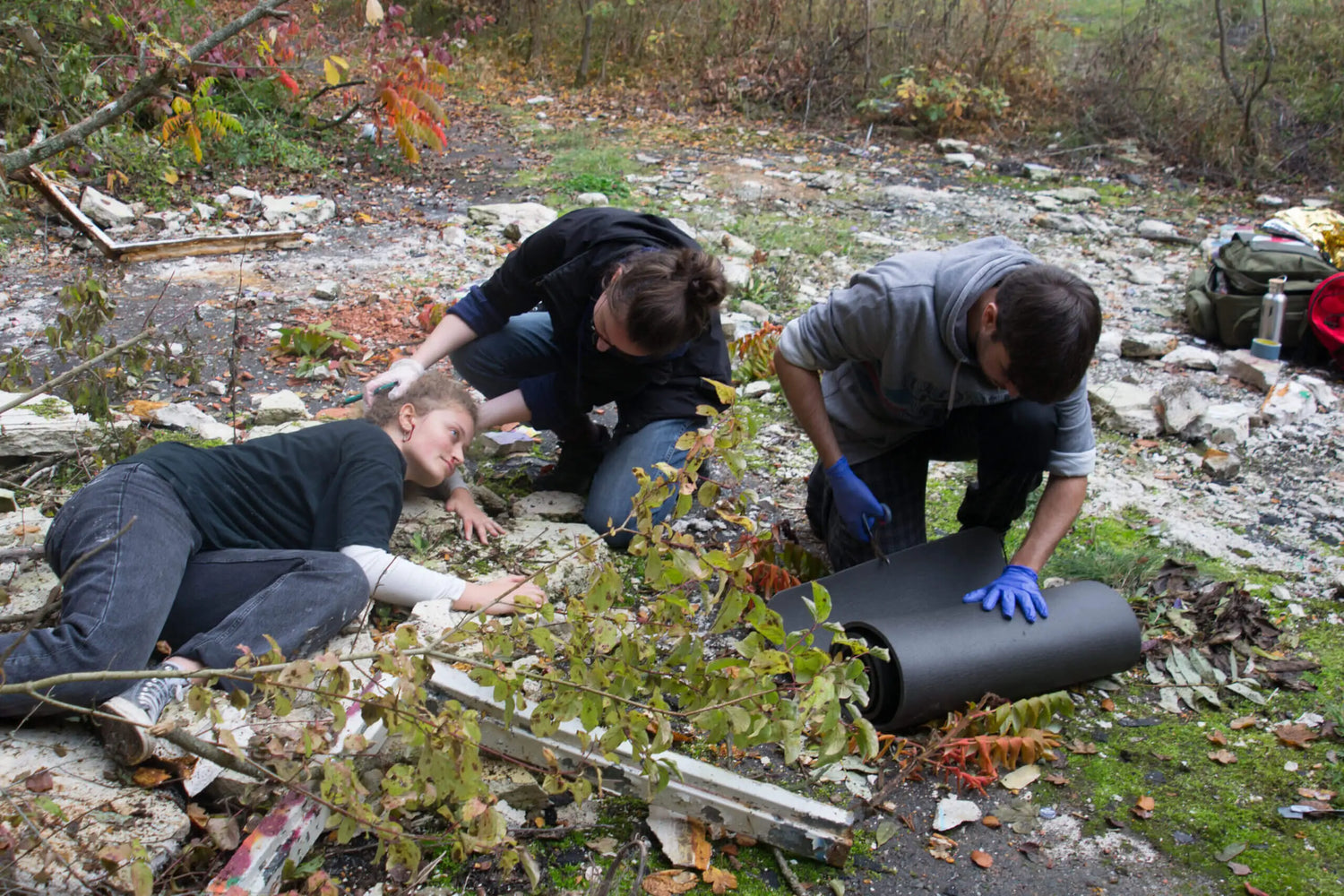
Answering this question is more difficult than you might initially think. We should start with the objectives of a first aid course. According to the Royal College of Surgeons in Edinburgh, there are three levels of isolation, defined by the evacuation time to a hospital. Under 4 hours, 4-8 hours, and over 12 hours are the time limits by which you should have reached an acute care hospital with your patient.
Most courses in Germany are limited to Level 1, with evacuation times of up to 4 hours. This makes sense, of course, as it's sufficient for most European areas in combination with good weather. At Hinterland Medics, we, along with a few other German providers, are stuck at Level 2 and 4-8 hour evacuation times. Looking ahead, we're eagerly aiming for 12 hours. However, with each additional hour of evacuation time, the demands on medical expertise increase exponentially. This quickly exceeds the (time) limits of what we would still consider a "course."
At the same time, Merten and I further refined the goal: We want you to avoid causing harm, to minimize any resulting damage, and to make smart decisions. We also want you to know when you can no longer help and to persevere until additional help arrives. Having defined our competency goal, we arrived at four essential components of every outdoor first aid course: fundamental knowledge, structure, evidence, and the ability to solve problems creatively.
Basic knowledge
For our emergency medical knowledge, we base our training on the paramedic training in Germany. This minimum qualification is found on German ambulances and represents the minimum level of emergency competence. We then adapt this to our situation in an outdoor context with limited resources and expand it with a substantial amount of general medical skills. After all, not everything out there is going to kill us. To condense this knowledge, we use a few tricks. For example, if there are different diseases affecting an organ, all with different symptoms, we explain the organ's function, which allows you to deduce how the symptoms manifest. Heart problems can present with swollen lower legs, fluid in the lungs, or simple fatigue. If you have a general understanding of how the circulatory system works, these symptoms suddenly all make sense. It's different when the problems are obvious and don't require deeper understanding. For example, with an allergy, we explain which symptoms to look out for. We only touch on the underlying processes, as they don't offer any added value for treatment. To organize material in this way beforehand, an instructor needs extensive background knowledge and a wealth of experience. The line between optimizing a topic without omitting something important or overloading it is a fine one, and one we ourselves are often still practicing balancing.
examination
To generally check whether the knowledge imparted by course providers is sufficient, ask what level of training the content is geared towards. You need to assess whether the training level might be too low for your plans. For example, a first aid course for a driver's license is probably not enough for a two-week wilderness trip in Alaska. Or consider whether the course promises are unrealistic. You can't teach medical treatment standards to laypeople in three days.
structure
I'd like to preface this point with a short anecdote. I recently led a seminar on what annoys doctors in hospitals most about their students. It was the students' lack of efficiency in their daily work. And indeed, I can say from my own university experience that every semester we're simply bombarded with an overwhelming amount of knowledge, in the hope that something will stick. Before exam weeks, you often search in vain for fixed procedures or high-quality summaries. The same problem exists with high-quality first aid courses. The knowledge you want to impart would be enough for weeks of instruction. At the same time, any kind of compression also brings with it a lack of clarity. This has been recognized in medicine, and algorithms have been used to try to create clarity. Unfortunately, there are now hundreds of these action plans (xABCDE, ISOBAR, SAMPLER, OPQRST, to name just a few), making it all the more confusing. We've currently solved this by focusing a lot of our content on prevention. What doesn't happen to you, you don't have to deal with. I'd estimate that more than half of our content is about defusing problems before they overwhelm you. This is partly because, with any level of experience, you can easily achieve this, and prevention isn't usually approached with tunnel vision under the stress of everyday life. If it does come to that, we'll limit ourselves to a shortcut that you'll have to work through repeatedly in the course until you can recite the algorithm by heart. xABCDE scheme It prioritizes medical actions and serves as a decision-making aid for strategic issues. It also prevents downtime, which is simply never good in crisis situations.
examination
Assessing the structure of an outdoor first aid course beforehand is difficult. Check who is involved in developing the course. Doctors are always a good start, but they're not a guarantee of quality! Ideally, educators, people with outdoor experience, physiotherapists, psychologists, etc., should also be involved. Furthermore, it's important to see if the course information makes any general reference to pedagogy. It's also a good sign when providers who put a lot of thought into their course structure clearly outline this in their course description, in addition to the knowledge being taught.
evidence
Evidence describes knowledge gained through observations from reproducible experiments. It therefore establishes an objective cause-and-effect principle. These findings are then summarized, for example, in treatment guidelines. These guidelines form the basis of the knowledge we impart and simultaneously serve as a standard for quality assurance. For our trauma-related component, we primarily refer to the S3 Polytrauma Guideline (1) and the ERC First Aid Guidelines (2). As a meta-study (simply put: many individual studies were combined and evaluated together), this guideline has the highest level of evidence. In other words, there is a high degree of certainty that the actions described in the guideline will result in the best outcome for the patient. However, many issues in expedition and wilderness medicine are not relevant enough for the global population to warrant comprehensive meta-studies. In these cases, we rely on relevant specialist literature, studies and case reports from the Wilderness Medical Society, the WHO, or articles by recognized experts in the field. Finally, there are some points that are based on our own experiences and sometimes even differ from the previous recommendations. This is partly because most guidelines are designed for a clinical setting. Unfortunately, in the field, we rarely have access to a sterile operating room, or we have to combine medical interventions with tactical decisions because more factors, such as weather or proximity to civilization, influence the decision. We clearly indicate these deviations and also point out that, in our experience, a different approach yielded better results in these situations. However, even in these rare cases, we strive to adapt to the recommendations as much as possible.
examination
Unlike structure, the evidence is relatively easy to verify. Reputable providers typically state the scientific basis of their courses, communicate important changes in guidelines on their website, or respond respectfully to inquiries about the underlying information sources.
Finding creative solutions to problems
If the three points mentioned above are well integrated into the course, they will inevitably enable you to creatively address problems, both in terms of stress levels and your ability to act effectively. Because rarely are two emergencies alike, and the sheer number of contributing factors means that there is often no one-size-fits-all solution. Merten and I believe it's crucial that you're able to apply your knowledge to any new problem you encounter after the course. In everyday life, we're often presented with predetermined solutions in many areas, which generally limits our ability to think outside the box. However, this ability is essential for overcoming critical situations in the course. Therefore, we give your creative thinking ample opportunity in the knowledge transfer, dedicated exercises, and the execution of emergency scenarios. After all, we want you to make smart decisions.
examination
You are responsible for assessing this point yourself. Finding solutions to problems varies greatly from person to person, improves with experience, and depends heavily on your initial motivation for taking an outdoor first aid course. However, if your chosen provider meets the first three criteria, there's a good chance they will also value your self-efficacy.
I hope this article has given you some helpful tips. Points that will help you choose your next course from the available options and ensure it meets your expectations. It's a fascinating field, and I congratulate you on taking the time to delve deeper into it!
(1) S3 guideline for polytrauma/severe injury treatment, 2022 edition